


rTMS

Transcranial Magnetic Stimulation TMS
Transcranial Magnetic Stimulation (TMS) is a novel, safe, and non-invasive medical technology. TMS treatment utilizes magnetic pulses generated by electromagnetic coils to stimulate specific areas of the brain to treat depression without any side effects caused by drug treatment. Our mission is to provide you with a professional, personalized therapeutic experience, empowering you to regain mental well-being and restore balance to your life.

What is rTMS?
rTMS(Repetitive Transcranial Magnetic Stimulation)is a non-invasive therapeutic technique that utilizes magnetic fields to stimulate specific areas of the brain. By generating brief magnetic pulses, rTMS regulates neural activity, particularly targeting the dorsolateral prefrontal cortex (DLPFC)—a region closely linked to mood regulation. Research indicates that individuals with depression often exhibit reduced activity in the DLPFC. By stimulating this area, rTMS helps restore normal neural functioning, thereby alleviating depressive and emotional symptoms.
rTMS is widely recognized by the international medical community and is highly effective for mood disorders, neuropathic pain, and stroke rehabilitation:

Mood Disorders (Particularly effective for Depression, Mixed Anxiety and Depressive Disorder [MADD], and Obsessive-Compulsive Disorder [OCD])
rTMS is highly recommended for individuals who:
-
Have shown limited response to traditional antidepressants or cannot tolerate their side effects
-
Are seeking rapid relief from mood symptoms to quickly resume their daily routines
-
Are looking for non-pharmacological (drug-free) treatment options

Healthy State
In healthy population, the prefrontal cortex is able to regulate the activity of the emotion centre of the brain, preventing it from over-activating.

Depression State
The metabolism of the prefrontal cortex slows down and fails to regulate the activities of the emotion centre of the brain. As a result, it may overactivate and patients may experience symptoms such as depression and anxiety.
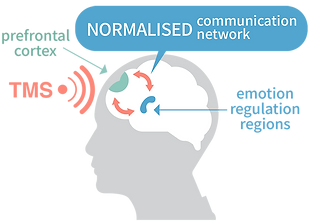
TMS Treatment
Transcranial magnetic stimulation therapy uses magnetic pulses to stimulate the prefrontal cortex of the brain in a non-invasive way, and utilizes the principle of neuroplasticity to restore its regulatory function to the emotional area of the brain to improve the symptoms of depression.

Neuropathic Pain
Neuropathic pain is a chronic pain condition caused by abnormal activity within the central nervous system, frequently described as a stinging, stabbing, numbing, burning, or electric shock-like sensation.
Long-term neuropathic pain can induce synaptic plasticity changes in the brain, which may include the strengthening or weakening of synaptic connections. This change can lead to abnormal signal transmission between neurons in brain regions associated with pain processing, such as the sensory cortex, resulting in functional alterations that further affect the perception and processing of pain.
Neuropathic pain can impact brain regions involved in emotional regulation, such as the amygdala and the prefrontal cortex, which may cause patients to experience emotional issues like anxiety and depression, thereby further intensifying the perception of pain. The sensation of pain can also occupy brain resources, and long-term neuropathic pain may consequently impair the patient's attention and memory functions.
Transcranial Magnetic Stimulation (TMS) therapy alleviates pain by reorganizing and repairing the dysfunctional brain networks responsible for pain perception and processing.

Stroke Rehabilitation
Stroke primarily manifests as muscle weakness or paralysis on one side of the body (usually the left or right side), leaving patients unable to perform normal activities. After a stroke, the balance of intracortical inhibition between the motor cortices of the affected and unaffected hemispheres is disrupted; the healthy brain hemisphere increases its inhibition over the affected hemisphere, which hinders neuroplastic changes in the damaged area and severely diminishes the effectiveness of rehabilitation training.
Through Transcranial Magnetic Stimulation (TMS) therapy, the inhibitory balance between the motor cortices of the affected and unaffected brain hemispheres can be restored, maximizing the effectiveness and outcome of stroke rehabilitation training.
Key Features of Our rTMS Services

Evidence-Based Technology
Our rTMS treatments adhere to international standards and are administered by professional psychiatrists and trained technicians, ensuring safety and efficacy. We utilize advanced, European-imported rTMS devices that comply with the highest medical standards.

Non-Invasive & Safe
rTMS requires no anesthesia or surgery, allowing you to remain fully awake throughout the session with no significant discomfort. Common side effects are mild (such as light headaches or scalp discomfort) and typically subside quickly after treatment.

Personalized Treatment Plans
Every patient's condition is unique. Our professional team conducts detailed pre-treatment assessments to customize the most suitable rTMS regimen based on your symptoms, medical history, and needs, including precise stimulation frequency, intensity, and number of sessions.

Comfortable & Private Environment
Our clinic provides a comfortable therapeutic environment where all consultations take place in private rooms. We strictly comply with the Personal Data (Privacy) Ordinance of Hong Kong to ensure your utmost privacy and data security.
Nexstim SmartFocus® Neuro-Wellness TMS System
Therefore, our clinic utilizes the world's only third-generation TMS system, SmartFocus® TMS, which has been clinically validated for precision by neurosurgery. This system is equipped with the most advanced 3D brain imaging guidance and electric field navigation features. We calculates treatment targets using resting-state functional magnetic resonance imaging (rs-fMRI) scan data, providing personalized and precise treatment for each patient.


is your ideal choice
*Data provided by Nexstim
Clinic Environment

Treatment Room

Treatment Room

Reception

Waiting Lounge
rTMS Treatment Process
Briefly describe your concerns via phone at 21802822 or WhatsApp at 65123002.
Initial Inquiry
01
Our specialists will conduct a one-on-one consultation to evaluate your suitability for rTMS therapy and answer your questions. The assessment includes medical history review, symptom analysis, and treatment goal setting.
Assessment Phase
02
Based on the assessment results, we will design a personalized rTMS regimen for you. A standard course usually consists of daily sessions (Monday to Friday) lasting about 20–30 minutes each, spanning 4–6 weeks. The specific number of sessions will be recommended by the doctor.
Formulating a Treatment Plan
03
During treatment, you will sit comfortably in a therapy chair. Magnetic pulses will target specific areas of your brain precisely. The process is painless and requires no special preparation. You can resume your daily activities immediately after the session.
Treatment Process
04
We will regularly evaluate the treatment outcomes, adjust your plan based on your progress, and provide follow-up psychological therapy or medication management recommendations.
Progress Tracking & Ongoing Support
05
Why Choose Our rTMS Services?

Professional Team
Administered by trained technicians and supervised directly by specialized psychiatrists with extensive clinical experience, ensuring the safety and efficacy of your treatment.

Flexible Arrangements
We offer flexible booking slots tailored to fit the fast-paced lifestyle of Hong Kong.

Multilingual Services
We provide consultations and treatments in Cantonese, English, and Mandarin to meet the needs of individuals from diverse backgrounds.

Comprehensive Support
By integrating rTMS with psychotherapy or other complementary therapies, we provide you with holistic mental health care.


